If you’re running an affiliate website or plan to add affiliate marketing to your blog, figuring out the best places for affiliate links is one of the first practical things to sort out.
Placement can really make or break your earnings. It’s not just about throwing links everywhere, smart positioning helps with both user experience and conversions. I’ve spent a lot of time testing what’s effective, so here’s a thorough look into where to add affiliate links for better performance and how to use them in ways your audience will actually appreciate.
Why Affiliate Link Placement Matters
The location of your affiliate links affects everything from user trust to your actual revenue. People have gotten pretty good at ignoring banners, and most are wary of hard sells. Well placed links tend to blend in while still catching the reader’s eye, which increases the likelihood of clicks and commissions. Strategic placement also helps keep your website looking clean and professional. Nobody wants to feel bombarded by links. Simply put, optimizing affiliate links on your website is about balance, staying helpful without being pushy.
Key Spots for Affiliate Links on Any Website
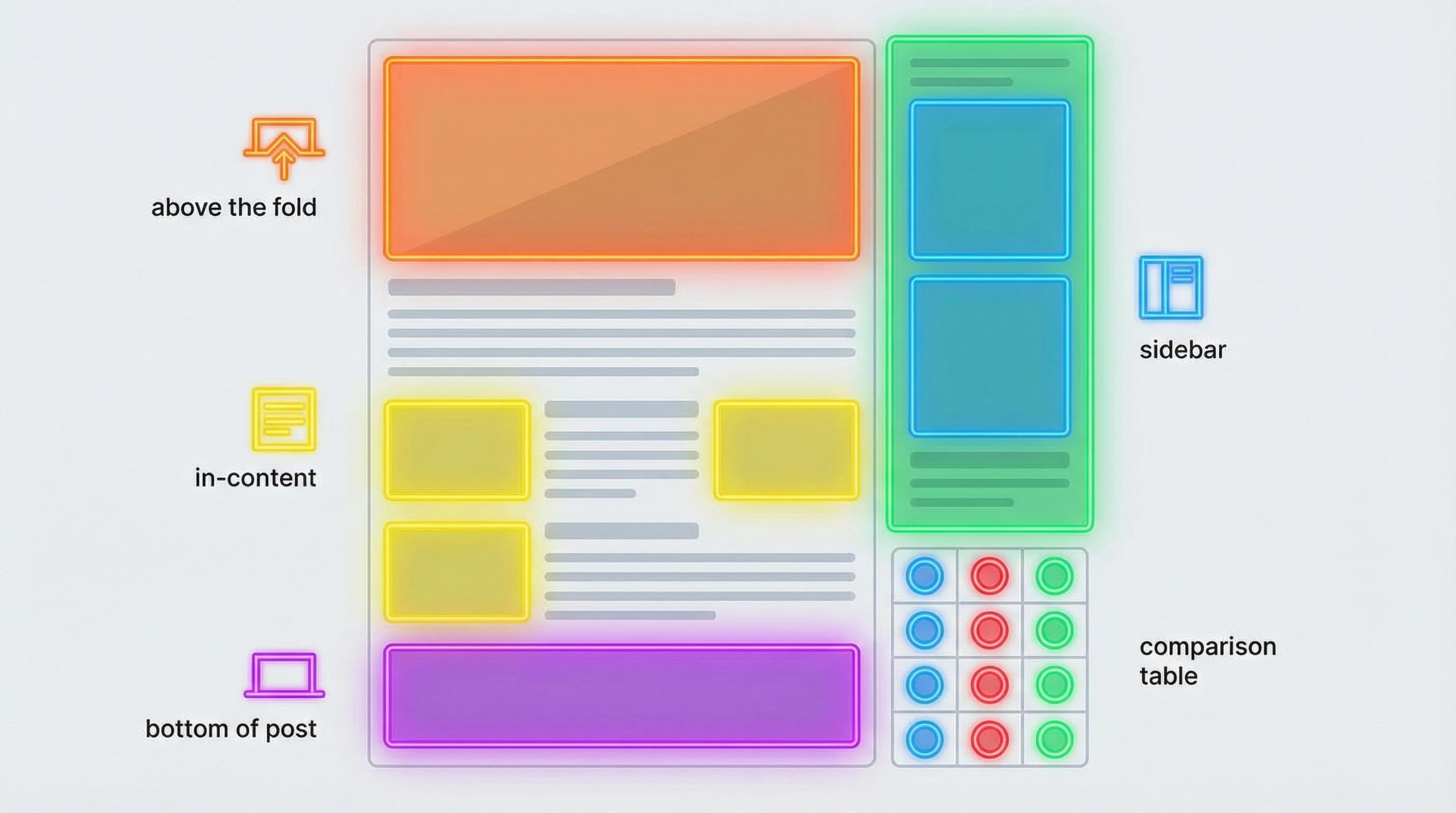
There are several areas on a website where affiliate links tend to work really well, based on both research and my own analytics. Here are the sections to consider when mapping out your affiliate link placement strategies:
- Above the Fold: Links at the top of a page (visible without scrolling) can see a lot of action. This is a prime spot for short product callouts, resource mentions, or featured recommendations.
- In Content Links: Linking naturally within your editorial content is super effective. Readers are already interested in what you have to say, so adding a helpful recommendation right when it’s relevant boosts clicks big time.
- Sidebar or Widget Areas: Sidebars are handy for evergreen or ongoing offers, like top product lists or banners. Just be careful to avoid cluttering this section.
- End of Content (Bottom of Posts): The people who finish your article are usually very engaged, so this is a great spot to gently recommend products or offer a next step.
- Within Comparison Tables: Tables that compare products are clear, quick, and readers tend to click links there as they actively decide what to buy.
- Call To Action (CTA) Boxes: CTA boxes or buttons stand out and can direct readers toward affiliate offers after explaining why the product is worth checking out.
- Navigation Menus: For well established sites, adding resource or product pages to your main menu can put affiliate offers front and center, especially for products you genuinely stand by.
How to Optimize Affiliate Links on Your Website
Getting the right positioning is about more than throwing links onto your highest traffic pages. Here are my top affiliate link placement tips, grounded in my own experiments and user feedback:
- Blend Links with Context: Insert affiliate links where they most naturally fit into your writing. This makes the recommendation feel authentic, not forced. Example: When you mention your favorite coffeemaker in a morning routine post, link the actual product name instead of using a generic “buy here” button.
- Keep User Experience Front and Center: Too many links or big banners everywhere turn off readers and can even reduce trust. Try to keep every page clear and uncluttered.
- Respect Where Readers Are in the Process: If your article explains how to choose a webcam, put affiliate links after you’ve helped people understand their options (not right at the start). This feels more helpful and leads to better conversions.
- Limit Sidebar and Footer Overload: Sidebars and footers are easy to fill up, but less is more here. Stick with your best converting or most relevant offers.
- Monitor Performance and Experiment: Use tracking tools or affiliate dashboards to see which placements are earning the most. Don’t be afraid to swap a link from the sidebar into the content, or move CTA boxes around to see what works best for your audience.
Types of Pages Where Affiliate Links Perform Best
Different page types serve different purposes. These are the ones I’ve found to consistently deliver strong affiliate results, especially when you apply solid affiliate link positioning tips:
- Product Reviews: Single product reviews or comparisons are built for affiliate sales. Put links close to key takeaways, pros and cons, or feature lists. Try eye catching CTA buttons here for readers ready to buy.
- How To Guides: Step by step guides are a natural place for links to tools or products you’re recommending as part of the process. When you walk readers through problem solving, make your affiliate suggestions super practical.
- Top Lists (e.g., “Best X for Y”): Listicles are popular, and conversion rates are strong here. Add links for each item in the list and consider a comparison table at the top or bottom of your post.
- Resource Pages: A master resource page linking to your favorite books, tools, and courses is excellent for evergreen affiliate income. These pages often double as internal navigation hubs.
- Case Studies and Personal Experience Posts: Sharing your genuine results with a service or product, along with a direct affiliate link, builds trust and can convert even the most cautious readers.
Common Challenges and How to Tackle Them
Affiliate link placement comes with some bumps in the road. Here are a few things that tend to trip people up, plus how I handle them:
- Banner Blindness: Readers ignore anything that looks like a blatant ad. Stick mostly to in content links, and use banners sparingly.
- Over Optimization: Loading up every page with tons of affiliate links can dilute their power. Focus on quality over quantity.
- Visual Clutter: Too many widgets or popups distract your visitors. A clean, simple design helps users see and interact with your links without feeling overwhelmed.
- Disclosure: It’s really important to be upfront about using affiliate links. Add a short, visible disclosure at the top of your posts or near your links. Besides being the right thing to do, it’s also required by most affiliate programs and consumer protection laws.
Dealing with Banner Blindness
Banners and obvious ads are often the first things users skip past. Contextual, text based affiliate links (naturally blended within the content) tend to convert much better. Try including links in spots where they genuinely help readers, like after you give a personal recommendation or practical tip.
Avoiding Over Optimization and Clutter
It’s easy to get carried away adding as many links as possible, but that usually backfires. I try to stick with one or two key offers per post unless the content truly deserves more. A clean design, along with smart use of whitespace, goes a long way in making your links stand out where it matters.
The Importance of Disclosure
Your audience values honesty. A simple note (something like “Some links in this post are affiliate links. If you click and buy, I may earn a commission at no extra cost to you.”) is enough. Most readers appreciate the transparency, and some studies actually show disclosures can increase trust and link clicks.
Quick Guide, How to Use Affiliate Links Effectively
It helps to have a simple checklist when you’re mapping out your affiliate links. Here’s mine, which covers the main things I always keep in mind:
- Pick placements that fit the content flow. Only add links where they make sense, usually after you’ve offered some explanation or helpful advice.
- Track clicks and conversions. Tools like Pretty Links or native affiliate dashboards show which spots perform best, so you can double down on what works.
- Test different link styles. Try a mix of inline links, buttons, and tables to see what your audience reacts to.
- Update and refresh old posts. Articles that get steady traffic are perfect candidates for fresh affiliate links or new placements.
- Check for broken or outdated links. Every so often, run a check on your links to avoid sending people to dead pages or expired offers.
Best Practices for Long Term Success
The most successful affiliate marketers keep things simple, honest, and reader focused. Here are a few of the habits I live by for using affiliate links effectively:
- Always provide real value first, then recommend products as a bonus, not the main focus.
- Regularly review which links and placements are earning. Don’t be afraid to tweak things based on data, even if it means removing underperforming links.
- Use copywriting techniques like urgency, scarcity, and social proof, but keep your tone friendly and genuine. “I use this software daily, and it’s saved me hours each week” is way more convincing than “Buy now before it’s gone!”
- Make sure your affiliate links work on mobile. Many readers browse on their phones, so keep your buttons and tables mobilefriendly.
- Stick with offers and programs you trust. Your reputation is built on your recommendations.
Examples of Effective Affiliate Link Placements
To help you visualize, here are a few real world scenarios where affiliate link placement makes a big difference:
- Tech Blog Review Post: Placing a standout CTA button underneath the final verdict grabs readers just as they finish reading your thoughts on a product.
- Wellness Site Resource Page: Including a table of your top five supplements, with clear links for each brand, makes buying easy for regular visitors.
- Photography Tutorial: Contextual links to camera gear just after you describe a technique let readers grab the same tools you’re using without searching elsewhere.
Frequently Asked Questions
These are the questions I get asked most about affiliate link positioning tips and website strategies.
Question: Is there such a thing as too many affiliate links?
Answer: Sure, too many can overwhelm readers and drop conversion rates. Try to focus on only the most relevant offers in each post.
Question: Should I use buttons or plain text links?
Answer: Both have their perks. Buttons stand out and prompt clicks for hot offers. In text links blend naturally for a softer sell. Mixing both throughout your site works well for a lot of topics.
Question: Can I put affiliate links in my email newsletter?
Answer: You can, but always check your affiliate programs’ terms first. Disclosures are also really important here.
Question: How do I know which affiliate link placements are working?
Answer: Track with affiliate dashboards or use link cloaking tools that offer stats. Look at traffic, clicks, and conversion rates for different link types and spots.
Final Thoughts
Figuring out where to put affiliate links for better performance takes experimenting, paying attention, and always keeping your readers’ needs first. The best places for affiliate links are where real value meets a clear call to action, and smart strategies help you get the most out of each opportunity. Approaching affiliate link placement as part art, part science, makes your website not just more profitable but also more useful to your audience. As you keep testing and refining, your efforts will keep paying off.
Keep testing, stay honest, and your affiliate earnings will follow. If you ever feel stuck or want to check out new tools and techniques, there are tons of communities and resources online to help you find inspiration and stay ahead.
To learn more, check this.
This article was created with AI assistance and reviewed by a human editor.








Great website layout, very easy to navigate. Great timing personally for me to read this article, helped me strategize and think more about something I have been overlooking on my website. Looking forward to finding more ways to incorporate my affiliates into my content and drive the interest in the product. I think I have the disclosure down, but need to hone in on my placement and integration better. Have to realize nobody wants to be sold or think they are forced or overwhelmed by the affiliate links. I need to build the value and urgency of the product and show how it would benefit the reader.
Thank you so much for this thoughtful comment, I really appreciate you taking the time to share that.
I love that you picked up on the balance between strategy and user experience. You’re absolutely right: people don’t want to feel sold to. The most effective affiliate content feels natural, helpful, and aligned with the reader’s needs, not forced or overwhelming.
It sounds like you already have a strong foundation with your disclosures (which is huge). Dialing in placement and integration is really about intent and context. When affiliate links are woven into genuinely valuable content, solving a problem, sharing a personal experience, or demonstrating a clear benefit they feel like a recommendation rather than a pitch.
I especially like what you said about building value and urgency. When readers understand why something matters to them and how it improves their situation, the interest comes naturally.
Excited to hear how you continue refining your approach, you’re clearly thinking about this the right way!