Artificial intelligence has transformed the marketing world. From predictive analytics and customer segmentation to personalized recommendations and automated email campaigns, AI-powered tools now help brands reach audiences faster and more efficiently than ever before. However, as businesses increasingly rely on marketing automation, a growing concern has emerged: AI bias in marketing automation.
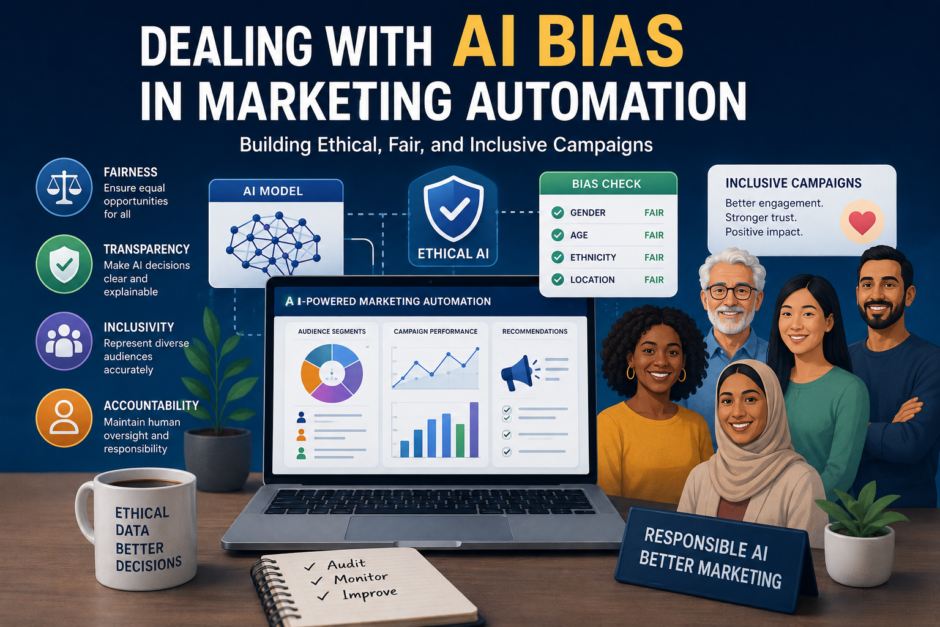
AI systems are only as good as the data they learn from. When algorithms are trained on incomplete, unbalanced, or historically biased datasets, they can unintentionally reinforce discrimination, exclude certain demographics, or deliver unfair customer experiences. For marketers, this creates not only ethical challenges but also reputational and legal risks.
Understanding how to identify, reduce, and prevent bias in AI-driven campaigns is now essential for modern businesses. Ethical AI marketing is no longer optional; it is a competitive advantage that builds customer trust, supports inclusivity, and improves long-term brand loyalty.
What Is AI Bias in Marketing Automation?
AI bias occurs when machine learning algorithms produce unfair or discriminatory outcomes due to flawed assumptions, skewed training data, or problematic system design. In marketing automation, this can affect how audiences are segmented, how ads are targeted, and how customers interact with automated systems.
For example, an AI-powered advertising platform might disproportionately show high-paying job ads to men rather than women if historical data reflects gender imbalances in leadership roles. Similarly, customer targeting algorithms may unintentionally exclude minority groups because they lack sufficient representation in training datasets.
These biases are often unintentional, but their impact can be significant. Businesses risk alienating customers, damaging their brand reputation, and violating data protection or anti-discrimination regulations.
Why AI Bias Matters in Digital Marketing
Marketing is fundamentally about understanding and connecting with people. When biased algorithms shape customer experiences, businesses may unknowingly create exclusionary or unfair campaigns.
Here are several major consequences of biased AI marketing systems:
Loss of Customer Trust
Consumers increasingly expect brands to demonstrate transparency and ethical responsibility. If customers feel they are being unfairly targeted or excluded, they may lose trust in the company.
Trust is especially important in AI-powered customer personalization. People want relevant experiences, but they also want fairness and accountability.
Reduced Campaign Effectiveness
Bias limits market reach. If AI systems prioritize certain demographics over others, marketers miss opportunities to engage diverse customer groups. Inclusive marketing automation leads to broader audience engagement and stronger campaign performance.
Legal and Compliance Risks
Governments worldwide are introducing stricter regulations around AI governance, privacy, and discrimination. Businesses that fail to address algorithmic fairness could face legal penalties and compliance issues.
Damage to Brand Reputation
Public backlash against biased AI systems can spread quickly online. Brands associated with discrimination or unethical automation practices may struggle to recover consumer confidence.
Common Sources of AI Bias in Marketing Automation
To reduce AI bias, marketers must first understand its origins. Several common factors contribute to biased marketing algorithms.
Biased Training Data
AI systems learn patterns from historical data. If that data reflects societal inequalities or lacks diversity, the algorithm will likely replicate those patterns.
For instance, if past marketing campaigns mainly targeted urban audiences, the AI may underperform when engaging rural communities.
Incomplete Customer Data
Missing or limited demographic information can create distorted insights. Algorithms may overgeneralize customer behavior or make inaccurate assumptions about certain groups.
Human Bias in AI Design
AI is created by humans, and human assumptions influence algorithm development. Developers and marketers may unknowingly introduce bias through feature selection, audience segmentation rules, or campaign objectives.
Feedback Loops
Marketing automation systems often optimize themselves based on prior performance. If biased campaigns perform well initially, the AI may continue reinforcing those same patterns over time.
Real-World Examples of AI Bias in Marketing
AI bias is not merely theoretical. Several real-world incidents have highlighted the dangers of biased algorithms in advertising and customer targeting.
Discriminatory Ad Targeting
Some advertising platforms have faced criticism for allowing housing, employment, or financial ads to exclude specific age groups, genders, or ethnic communities.
This type of algorithmic discrimination raises serious ethical concerns and may violate equal opportunity laws.
Biased Recommendation Engines
Recommendation algorithms can unintentionally favor certain products, creators, or demographics while limiting visibility for others. This affects not only customer experiences but also market fairness.
Unequal Customer Support
AI chatbots and automated customer service tools may struggle to understand dialects, languages, or communication styles, leading to inconsistent service quality across demographics.
How to Reduce AI Bias in Marketing Automation
Reducing bias requires a proactive and ongoing approach. Ethical AI marketing depends on transparency, accountability, and continuous monitoring.
Use Diverse and Representative Data
The foundation of fair AI systems is high-quality data. Businesses should ensure datasets include diverse demographics, behaviors, geographic regions, and customer experiences.
Data diversity improves customer segmentation accuracy and reduces the risk of exclusionary targeting.
Conduct Regular AI Audits
AI systems should be audited regularly to identify unfair outcomes or hidden patterns of discrimination. Marketing AI audit frameworks help organizations evaluate algorithmic fairness and campaign inclusivity.
Key questions to ask include:
- Are certain demographics consistently underrepresented?
- Does the algorithm produce unequal outcomes?
- Are campaign recommendations transparent and explainable?
Regular audits help marketers detect problems before they escalate.

Prioritize Explainable AI
Explainable AI allows marketers to understand how algorithms make decisions. Transparency improves accountability and helps teams identify problematic assumptions.
When AI systems operate as “black boxes,” bias becomes harder to detect and correct.
Implement Human Oversight
Automation should not replace human judgment entirely. Human oversight remains essential for reviewing campaign decisions, monitoring ethical concerns, and validating AI-generated insights.
Marketing teams should retain final control over high-impact decisions related to targeting, personalization, and customer segmentation.
Establish Ethical AI Guidelines
Organizations should create formal AI ethics policies that define acceptable marketing practices, fairness standards, and accountability procedures.
Ethical AI governance frameworks help ensure consistency across departments and technologies.
Test Campaigns Across Demographics
Before launching campaigns, marketers should test AI-generated content and targeting strategies across diverse audience groups. Inclusive testing helps identify unintended bias early in the process.
Ethical AI Marketing Best Practices
Responsible AI marketing requires more than technical fixes. It also involves building an ethical culture within the organization.
Focus on Inclusive Marketing
Inclusive marketing considers diverse customer identities, experiences, and needs. AI systems should support, not undermine, these goals.
Brands that prioritize inclusivity often achieve stronger customer loyalty and broader market appeal.
Balance Personalization and Privacy
AI-powered personalization can improve customer engagement, but excessive data collection raises ethical concerns.
Marketers should practice responsible customer data usage by collecting only necessary information and being transparent about how data is used.
Build Diverse Teams
Diverse marketing and development teams are more likely to recognize potential biases and create fairer AI systems. Different perspectives improve decision-making and reduce blind spots.
Monitor AI Continuously
AI systems evolve over time. Continuous monitoring ensures algorithms remain aligned with ethical standards as customer behaviors and datasets change.
Bias mitigation is not a one-time task; it is an ongoing process.
The Role of AI Governance in Marketing
As AI adoption grows, businesses need structured governance systems to manage risks and maintain accountability.
AI governance in marketing involves:
- Defining ethical standards
- Establishing compliance procedures
- Monitoring algorithm performance
- Documenting decision-making processes
- Ensuring regulatory compliance
Strong governance helps organizations build trustworthy AI marketing platforms while reducing operational and legal risks.
Consumer Expectations Around Ethical AI
Today’s consumers are increasingly aware of how AI influences their online experiences. People want brands to use automation responsibly and transparently.
Studies consistently show that consumers value:
- Fair treatment
- Transparent data practices
- Ethical personalization
- Privacy protection
- Human accountability
Businesses that prioritize responsible automation can strengthen customer relationships and differentiate themselves in competitive markets.
AI Bias and Brand Reputation
Brand reputation is closely linked to ethical behavior. A single incident involving biased advertising or discriminatory targeting can trigger public criticism and negative media attention.
On the other hand, companies known for ethical AI practices often gain customer trust and industry credibility.
Responsible AI marketing is therefore both a moral obligation and a strategic business investment.
The Future of Ethical AI Marketing Automation
The future of marketing automation will depend heavily on fairness, transparency, and accountability.
Several emerging trends are shaping the evolution of ethical AI marketing:
Increased Regulation
Governments are developing stricter rules for AI accountability, privacy, and the prevention of discrimination. Businesses will need stronger compliance strategies to meet evolving standards.
AI Fairness Tools
New fairness monitoring tools are helping organizations measure and reduce algorithmic bias more effectively. These technologies support ethical predictive analytics and transparent decision-making.
Greater Consumer Awareness
Consumers are becoming more informed about how AI systems work. Brands that communicate openly about their AI practices will have a competitive advantage.
Human-Centered AI Design
Future AI systems will increasingly emphasize collaboration between humans and machines rather than full automation. Human-centered AI prioritizes fairness, empathy, and customer well-being.
Building Trust Through Responsible AI Marketing
Trust is the foundation of successful marketing. While AI offers powerful opportunities for efficiency and personalization, businesses must ensure their systems operate fairly and ethically.
Reducing AI bias in marketing automation requires commitment across technology, leadership, and organizational culture. Marketers must use diverse data, conduct regular audits, maintain human oversight, and implement transparent AI governance frameworks.
Ethical AI marketing is not about eliminating automation, it is about creating responsible systems that serve all customers fairly. Brands that embrace inclusivity, accountability, and transparency will not only reduce risk but also build stronger customer relationships and sustain long-term, sustainable growth.
As AI continues to reshape digital marketing, businesses that prioritize fairness today will become the trusted industry leaders of tomorrow.