Remote jobs are everywhere these days, but not every offer you come across is legit or even worth your time. I’ve seen firsthand how shiny promises and remote flexibility can draw people in, only to end up in a mess. Knowing how to spot red flags can save you a ton of trouble, wasted effort, or even protect you from scams. I’m breaking down what to watch out for, how to check if an offer is real, and a checklist you can use every time you get a remote job offer.
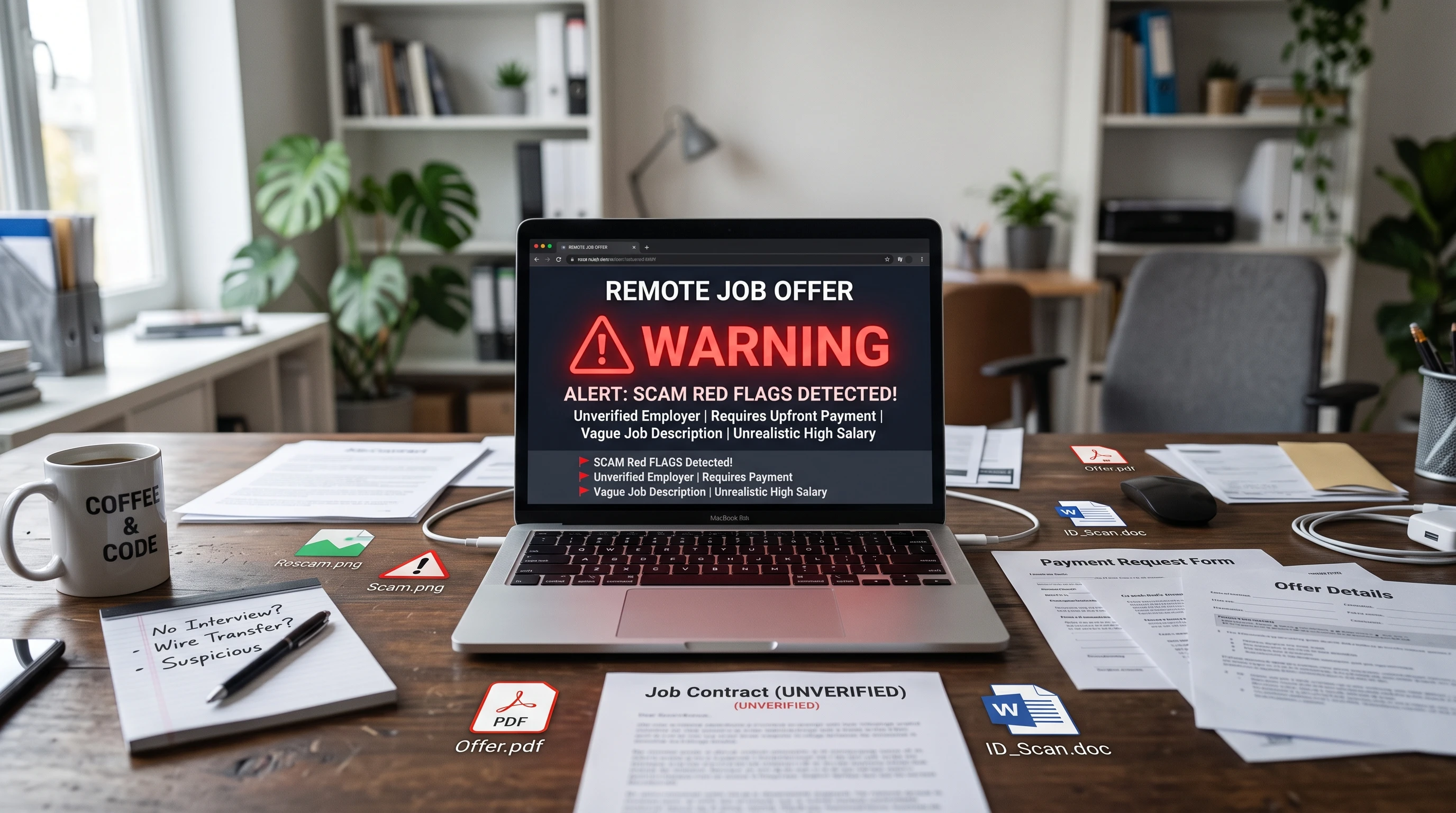
Common Signs of a Scam Remote Job
Scam job offers have a few classic moves that keep showing up. Even if you think you’d never fall for one, it’s wild how slick some of these setups can get. Here are a few things I’ve noticed that should immediately get your guard up:
- Payment Requests Upfront: Real employers don’t ask you to send money for training, equipment, or any “guarantee” fee. If someone wants cash before you even start, just walk away.
- Vague Company Info: If the company name is missing, their website looks unfinished, or the contact details seem off, that’s a big warning sign. Trustworthy businesses will have a digital footprint you can actually find.
- Unsolicited or Pushy Offers: Random messages offering you a job you never applied for, especially on places like WhatsApp or Telegram, are super sketchy.
- Poor Communication Quality: If emails are filled with spelling mistakes, generic phrases, copied templates, or just seem impersonal, it’s worth being cautious.
- High-Pressure Tactics: If they’re rushing you to decide or accept an offer ASAP; sometimes within a few hours; that’s suspicious. Good companies want you to ask questions and make an informed choice.
How to Spot Bad Remote Job Offers
Bad job offers aren’t always scams; sometimes they’re just exploitative or incredibly disorganized. Here’s how I break down some of the biggest worries:
- Weird Interview Processes: Watch for interview processes that are super short (like, you get the job after a five-minute chat) or only text based over messaging apps. Genuine companies want to actually talk to you and check your skills.
- Unrealistic Pay for Little Work: If someone is offering pay that’s way above what’s standard for minimal effort or zero experience, that’s a red flag. This trick is common in scams where they’ll later ask you for money or steal your info.
- Request for Sensitive Info Too Early: If you’re being asked for your social security number, bank info, or copies of your ID before even signing a contract, this isn’t safe. Only provide sensitive details after you’ve verified the job is real and you have an official agreement in place.
I once had a “recruiter” ask me for a scan of my passport before any formal interview. That was all I needed to shut the conversation down. Definitely not a real offer.
Best Practices for Evaluating Remote Jobs
Deciding if a remote job is legit takes a little detective work. Here are some simple but super useful steps that can protect you:
- Research the Company: Look for the company’s website, LinkedIn page, and Google reviews. A web search with “scam” plus the company name can reveal bad experiences others had.
- Verify Who You’re Talking To: Check if the email matches the company’s official domain, or if the recruiter has a LinkedIn profile that’s active and legit.
- Check Past Employee Reviews: Reading actual experiences on Glassdoor, Indeed, or Reddit can give you a reality check on what’s normal for this company.
- Confirm Legal Registration: Look up if the company is actually a registered business and if their physical address lines up with what they claim online.
- Ask for References or a Sample Contract: Don’t be afraid to ask for more info before making any moves. Real employers don’t mind answering questions or sharing a sample contract, payroll details, or getting you in touch with a current team member.
Sometimes, a basic Google search can reveal that the “new” company is copying another brand’s website or using a free website builder domain. That’s usually a no-go.
Remote Job Offer Red Flags Checklist
It’s easy to get carried away by the excitement of working from anywhere, but double checking is worth the time. Here’s the checklist I use to protect myself before accepting any remote job:
- Did they ask for money or sensitive info before you signed a contract?
- Can you find the company’s business registration or reviews?
- Is the recruiter’s contact information or LinkedIn profile legitimate?
- Does the interview process seem too fast or only involve texting?
- Is the job description vague or inconsistent across their platforms?
- Are salary, benefits, and work hours clearly explained?
- Do company representatives avoid your legit questions or dodge requests for references?
- Are you being pushed to start immediately or pressured to decide fast?
- Did you apply, or did they contact you out of the blue with a job offer?
Pausing to run through this checklist, even just mentally, can help keep things safe and hassle free.
Red Flags in Remote Job Listings
The first signs of something odd can pop up in the job posting itself. Here’s what to look for when you’re browsing remote jobs on LinkedIn, Indeed, or niche boards:
- No Company Name or Fake Names: Listings that just say “Confidential” or use names similar to real companies are worth extra investigation.
- Salary Transparency Issues: Super vague or missing salary info is a little fishy. Some real companies do hide ranges, but it’s still worth checking why, especially when paired with other odd details.
- Overly Generic Descriptions: If the job description sounds like it could fit literally any job, anywhere, it might not be real. Scam listings often copypaste templates to sound convincing at first glance.
- Poor Grammar or Spelling: These mistakes in a company job post could indicate a rush job or even that the employer isn’t who they claim to be.
- Odd Requirements or Promises: Warnings show up when they promise instant bonuses, “no experience required” for specialized fields, or require you to use your personal equipment for company tasks with no compensation.
Paying attention to the language used in job ads keeps you informed and helps you weed out time wasters before you’re too invested.
General Remote Work Offer Red Flags During Negotiation and Onboarding
Even legit looking jobs can reveal red flags after the interview process. A few things have caught my eye more than once:
- No Written Contract: Never start work based purely on a verbal agreement or just a handful of emails. You’ll want a written contract that lays out role, salary, payment schedule, remote work requirements, benefits, and what happens if the relationship ends early.
- Dodgy Payment Methods: If they offer to pay you via prepaid cards, crypto, or ask you to set up strange payment accounts, that’s worth some serious questions.
- Lack of Proper Onboarding: Real companies set you up with training, documents, and an introduction to the team. If you’re just dropped into tasks with zero resources, it’s worth asking what support they’ll actually provide.
- Frequent Last Minute Changes: It’s a bad sign if salary, role, or hours start shifting at the last second before your start date or just after you start.
- Requests for Unusual Tasks: Sometimes scammers or exploitative companies will ask you to perform tasks totally unrelated to the job description, like handling personal financial transactions or moving funds between accounts. That’s a major red flag.
If something feels weird or off during negotiation, like the person you interviewed with disappears or HR suddenly refuses to answer questions, it’s okay to step back and reconsider.
Frequently Asked Questions
Remote job seekers have plenty of questions and concerns, especially now when scams are getting trickier. These are some common ones I get asked a lot:
How can I make sure a remote job is real?
Check the legitimacy of the company, talk to people who’ve worked there (if you can), and never send money or personal info before seeing a legit offer letter and contract.
Is it safe to give my bank info for payroll right away?
Nope. Only give out bank or personal details after you’ve confirmed the company is legit and you’ve signed a contract. It’s always fine to double check before sharing info.
What are reliable resources for researching companies?
Sites like Glassdoor, LinkedIn, Trustpilot, and Reddit can be super useful. Even a quick Google search for “company name + scam” is pretty handy for catching common issues.
I got a remote job offer after a single chat. Is that normal?
It’s not typical, especially for better paying jobs. Most real employers will interview you at least once (usually on video) and may ask for samples or references.
Wrapping up
Staying safe with remote job offers really comes down to not taking everything at face value. There’s nothing wrong with being a little skeptical and making sure the company, offer, and people on the other end are the real deal. Careful research, asking direct questions, and trusting your gut can save you a world of trouble. I always double check before accepting remote gigs and encourage other job seekers to do the same. The right job is out there; you just want to make sure it’s actually the right one for you.

This article was created with AI assistance and reviewed by a human editor.